
 Español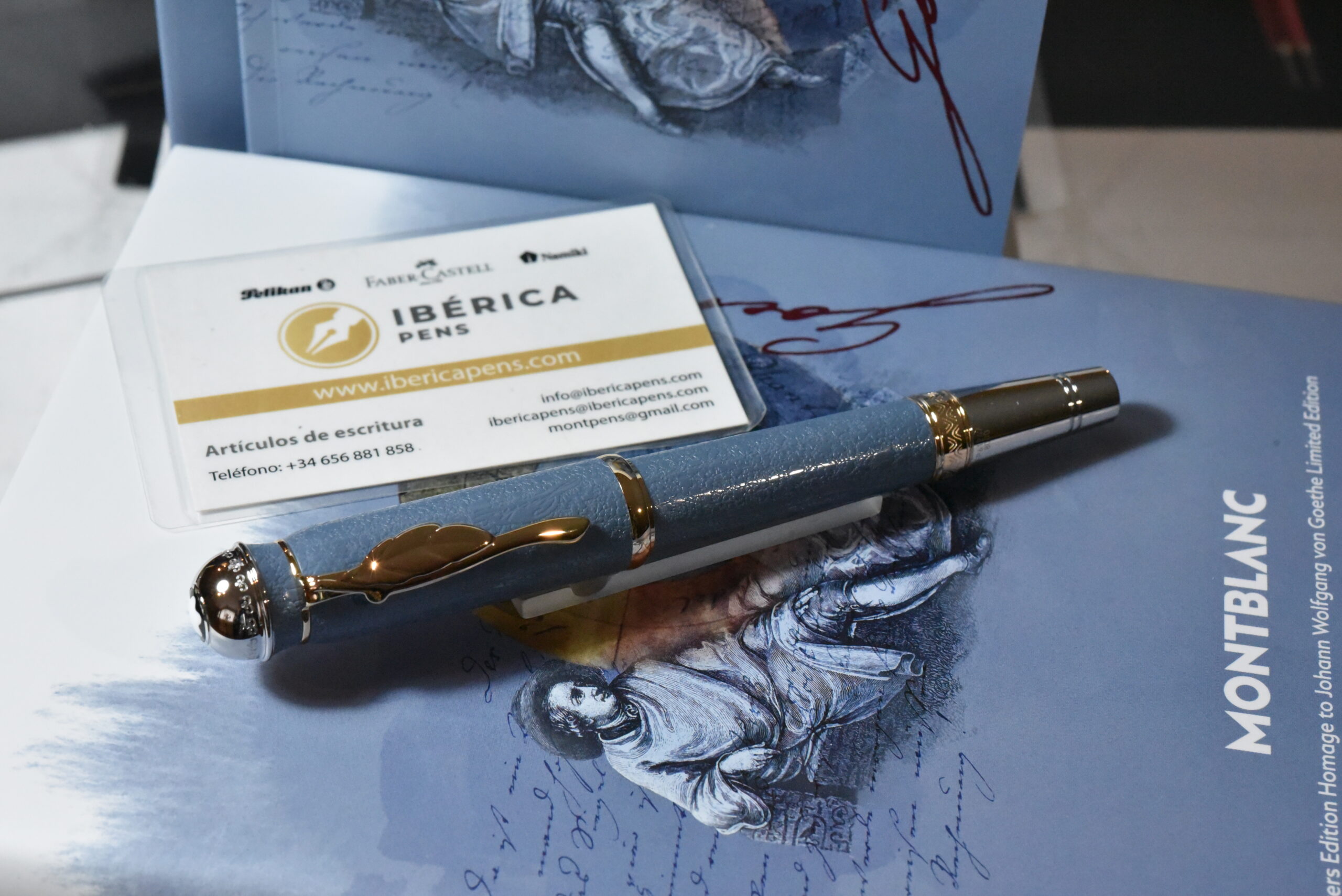
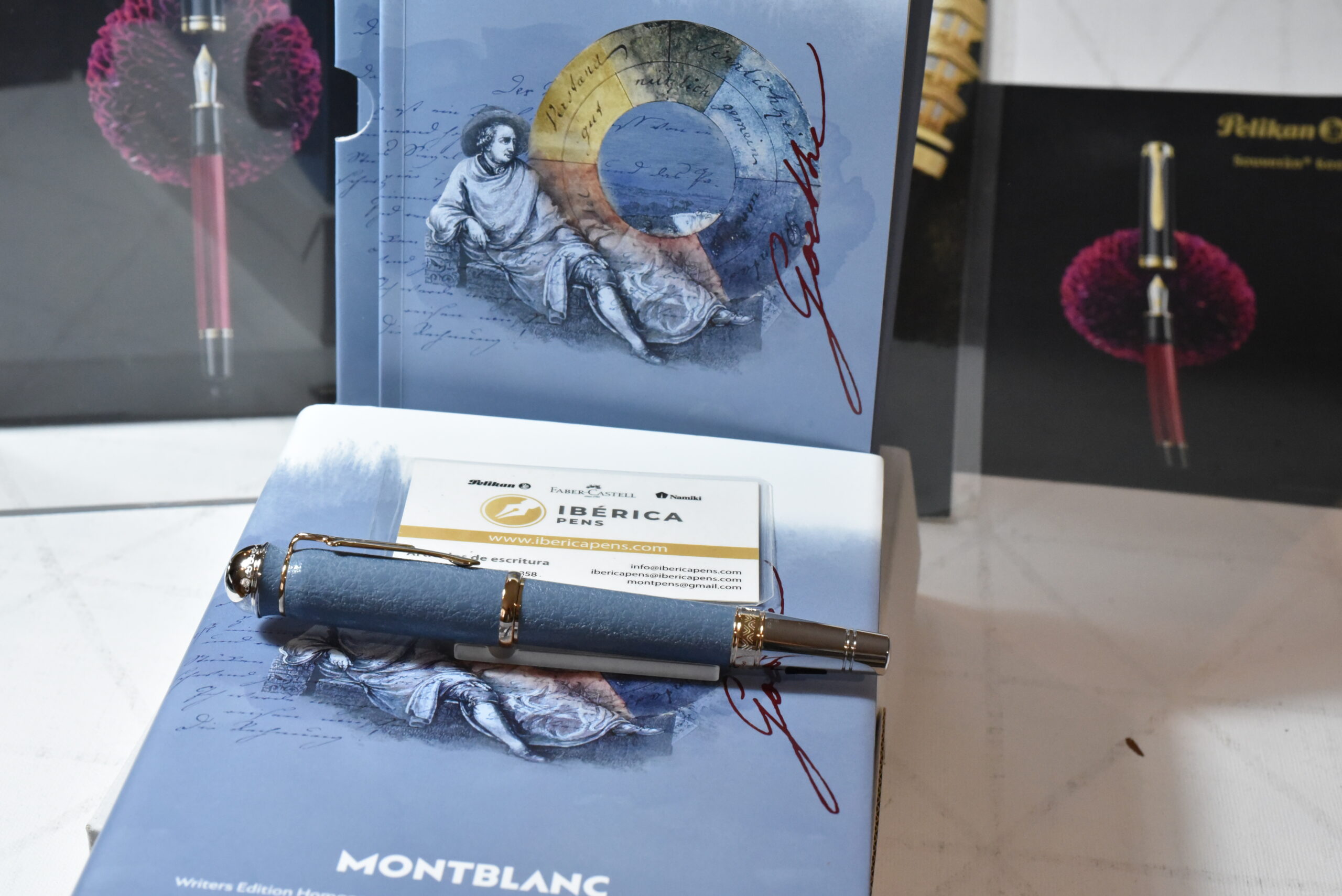
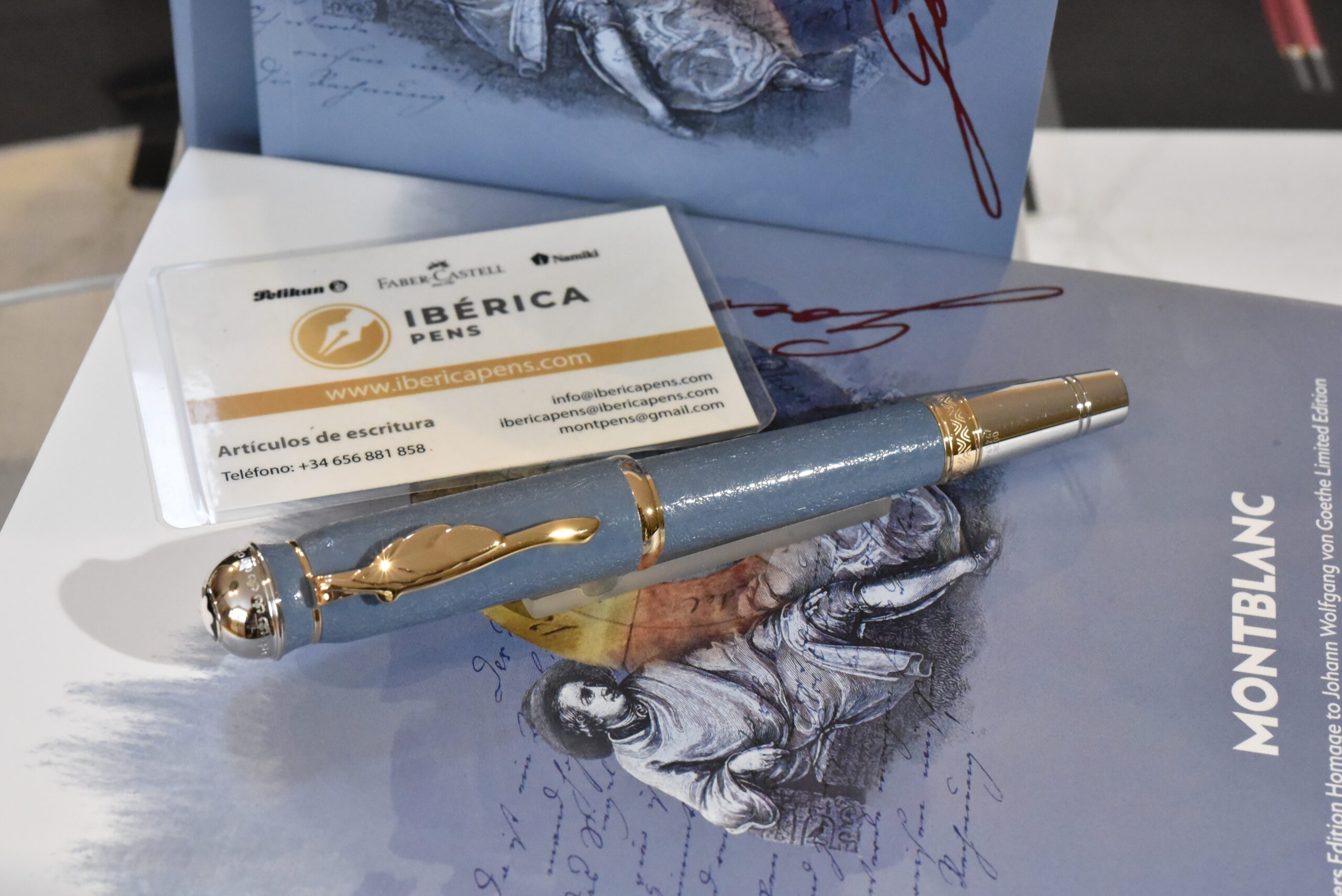
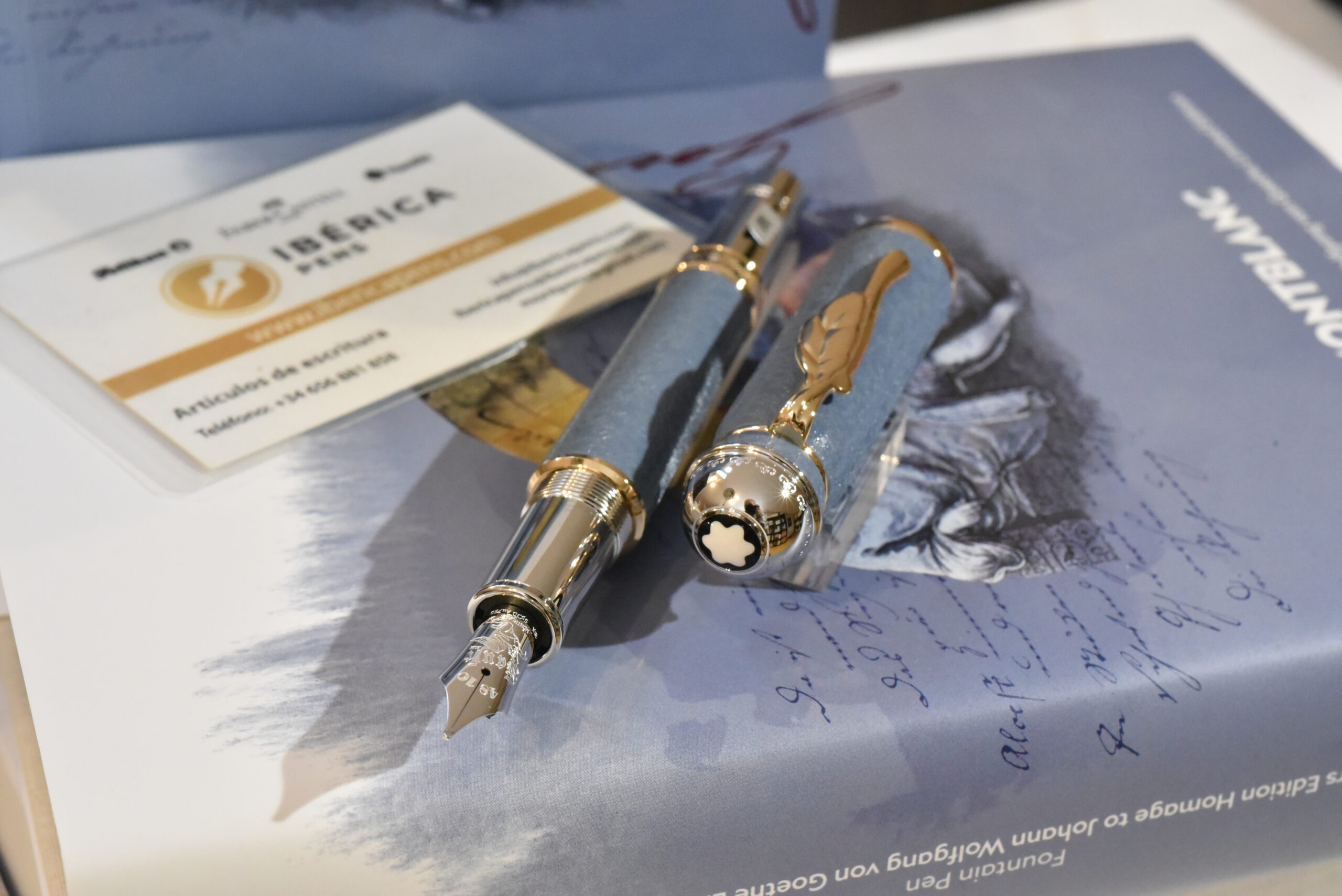
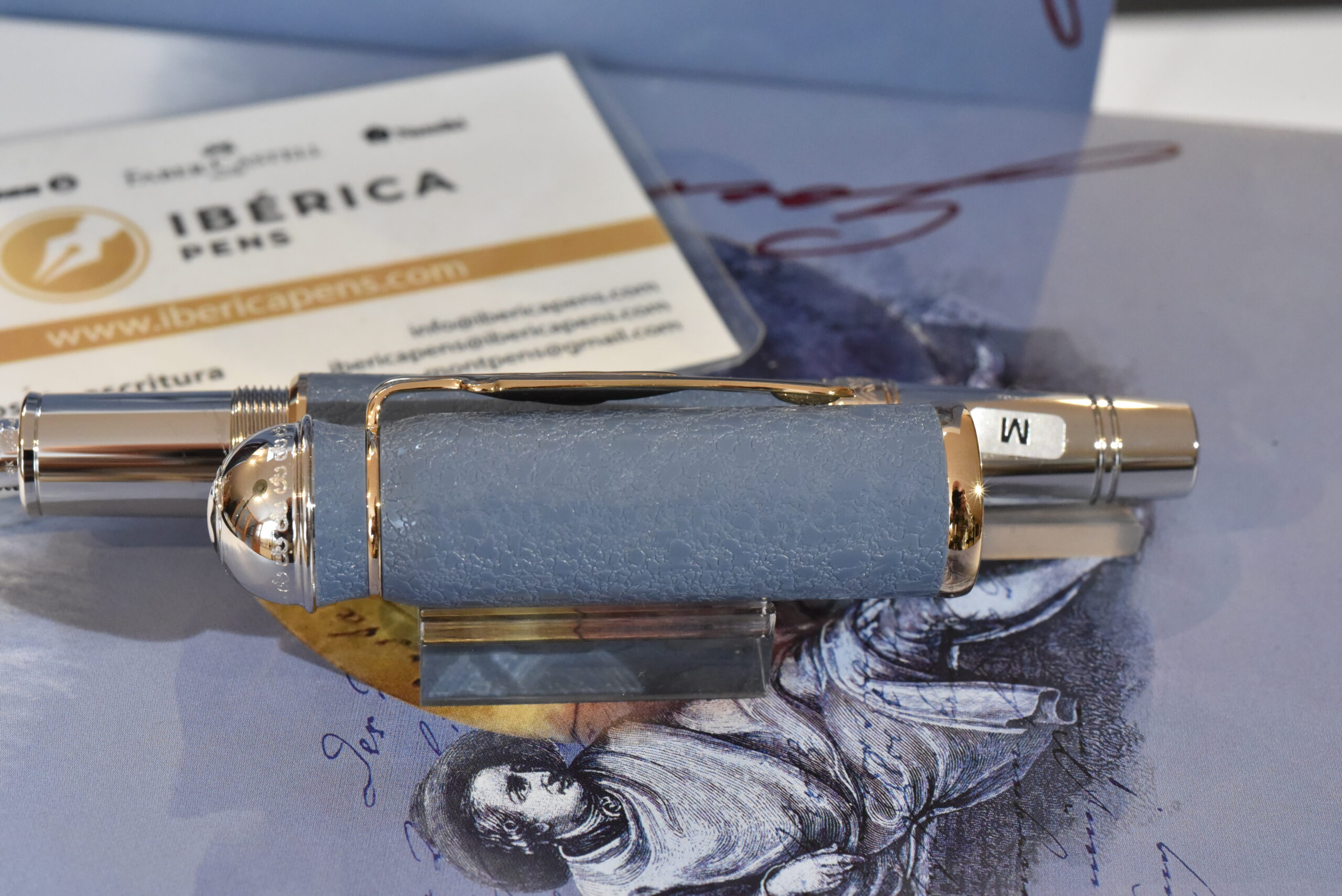
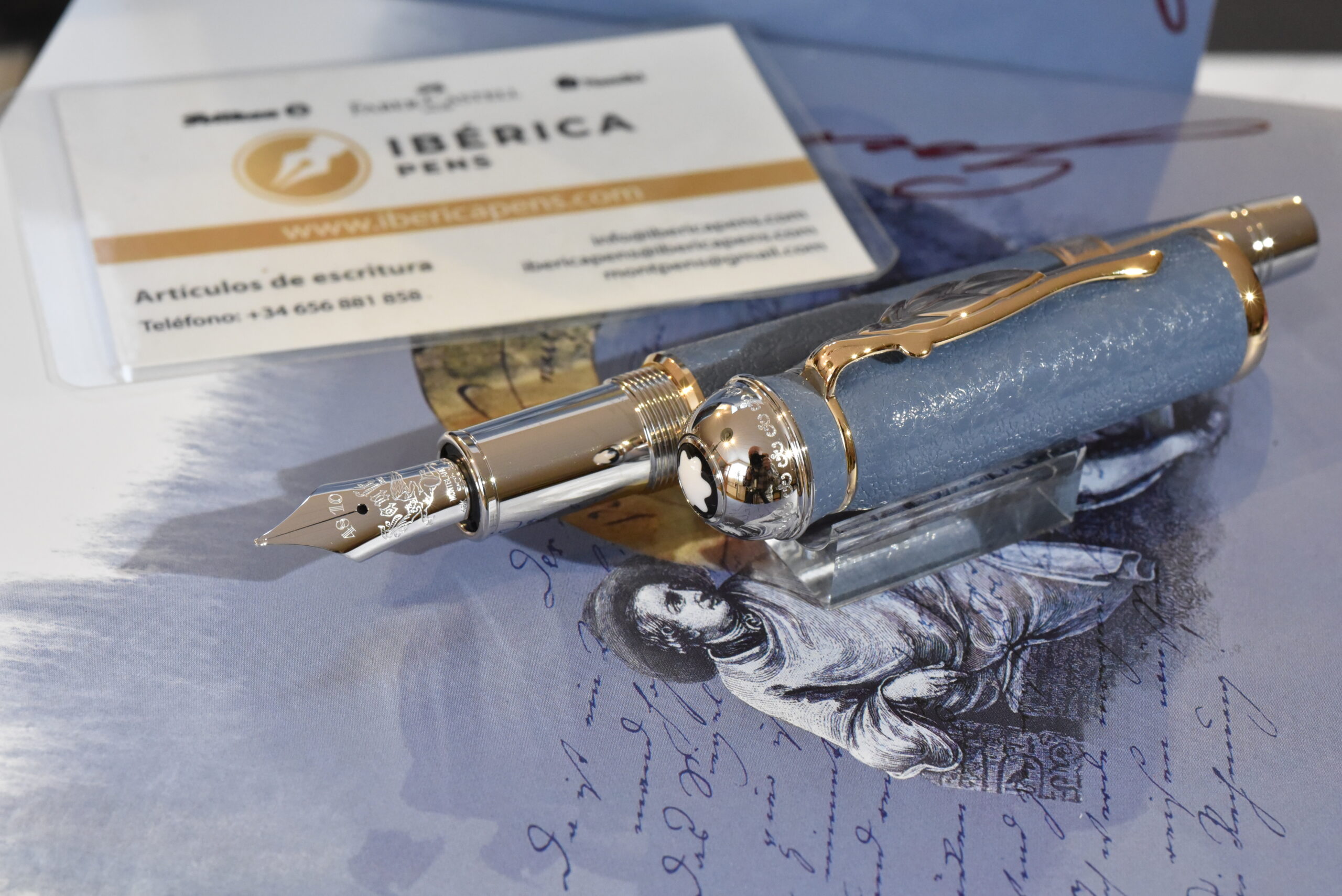
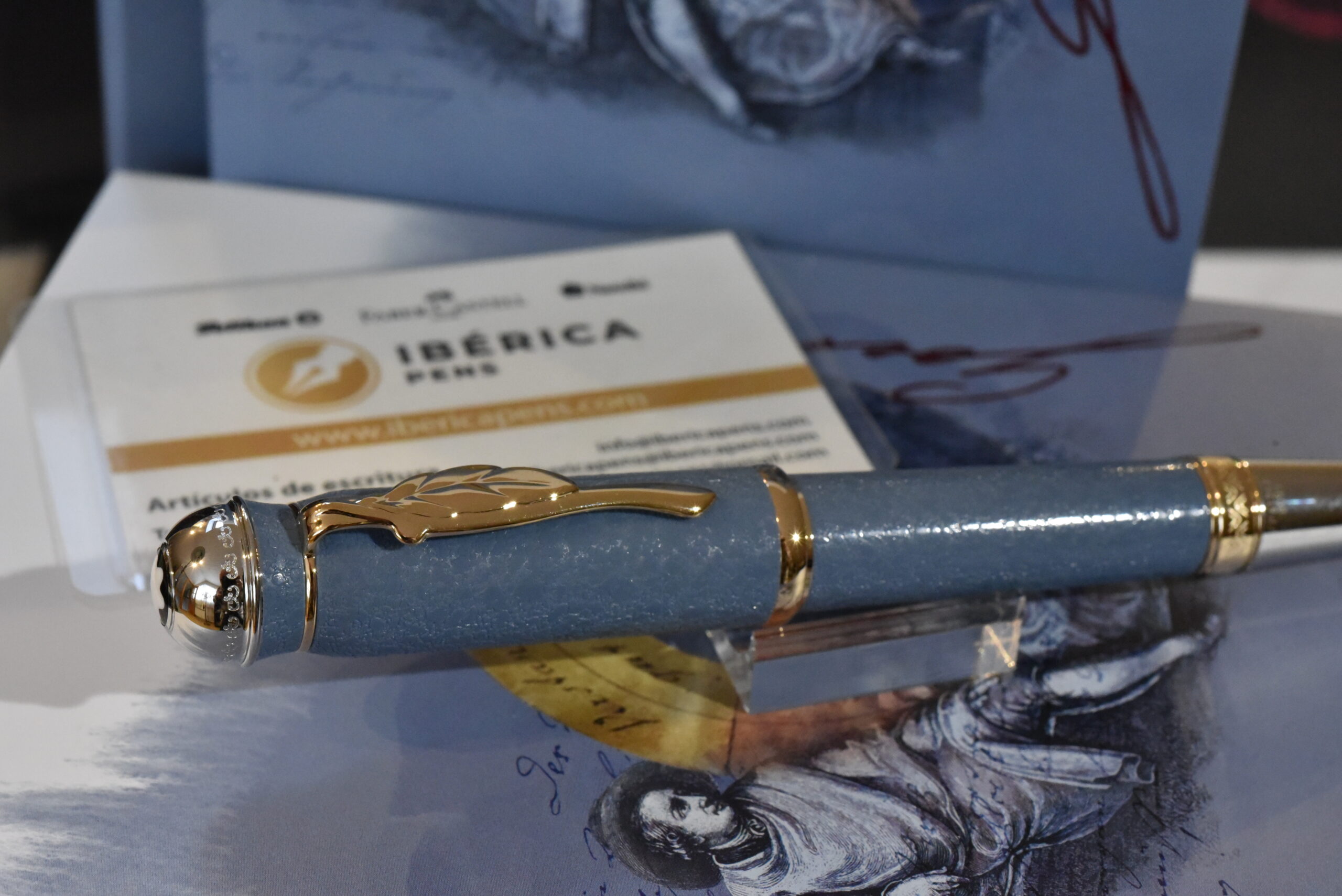
MONTBLANC WRITERS EDITION 2025 J.W.GOETHE FOUNTAIN PEN
1.410,00€
2025 Johann Wolfgang von Goethe Edition Fountain Pen with MClip Nib
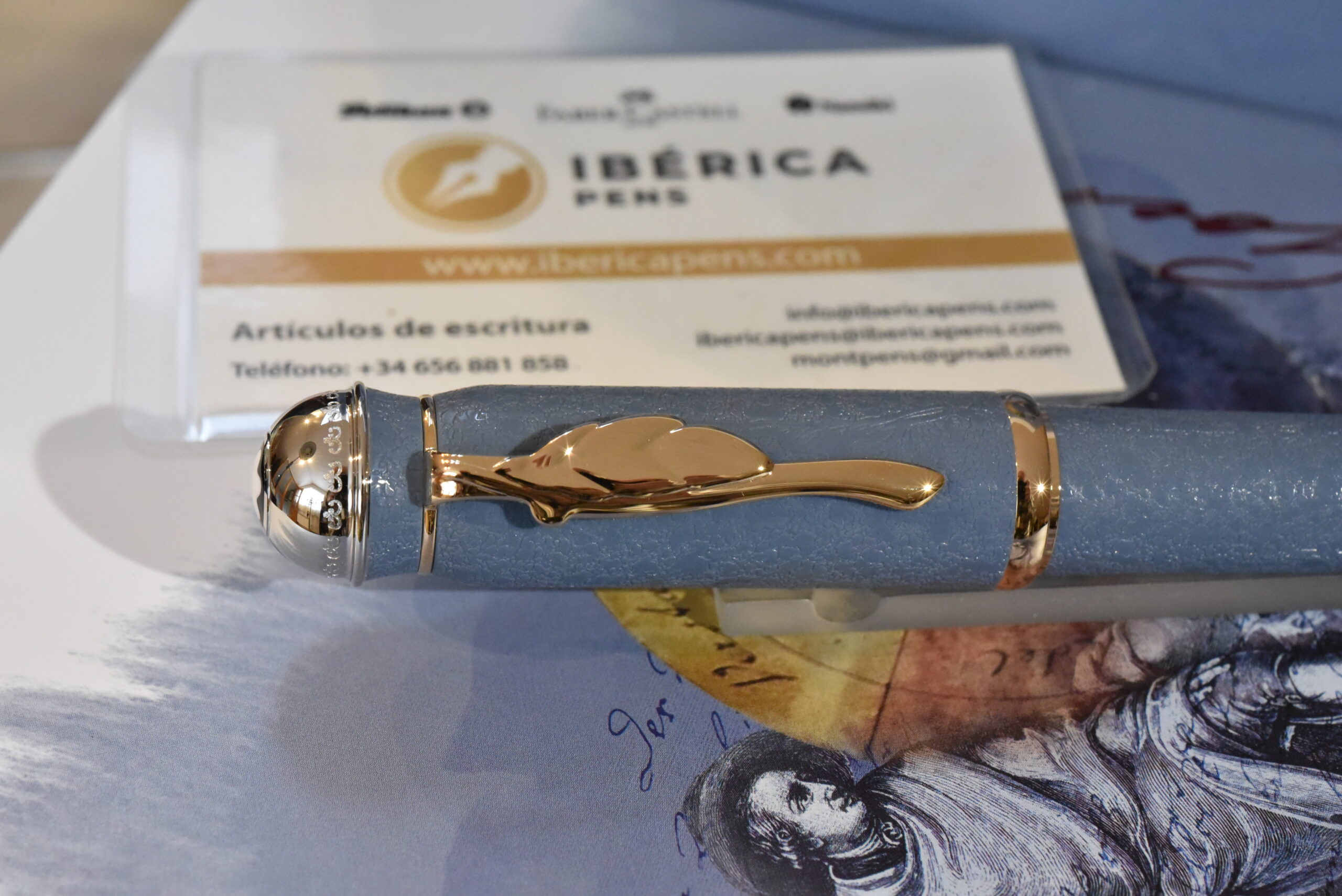
Leaf-shaped clip with iconic gold plating
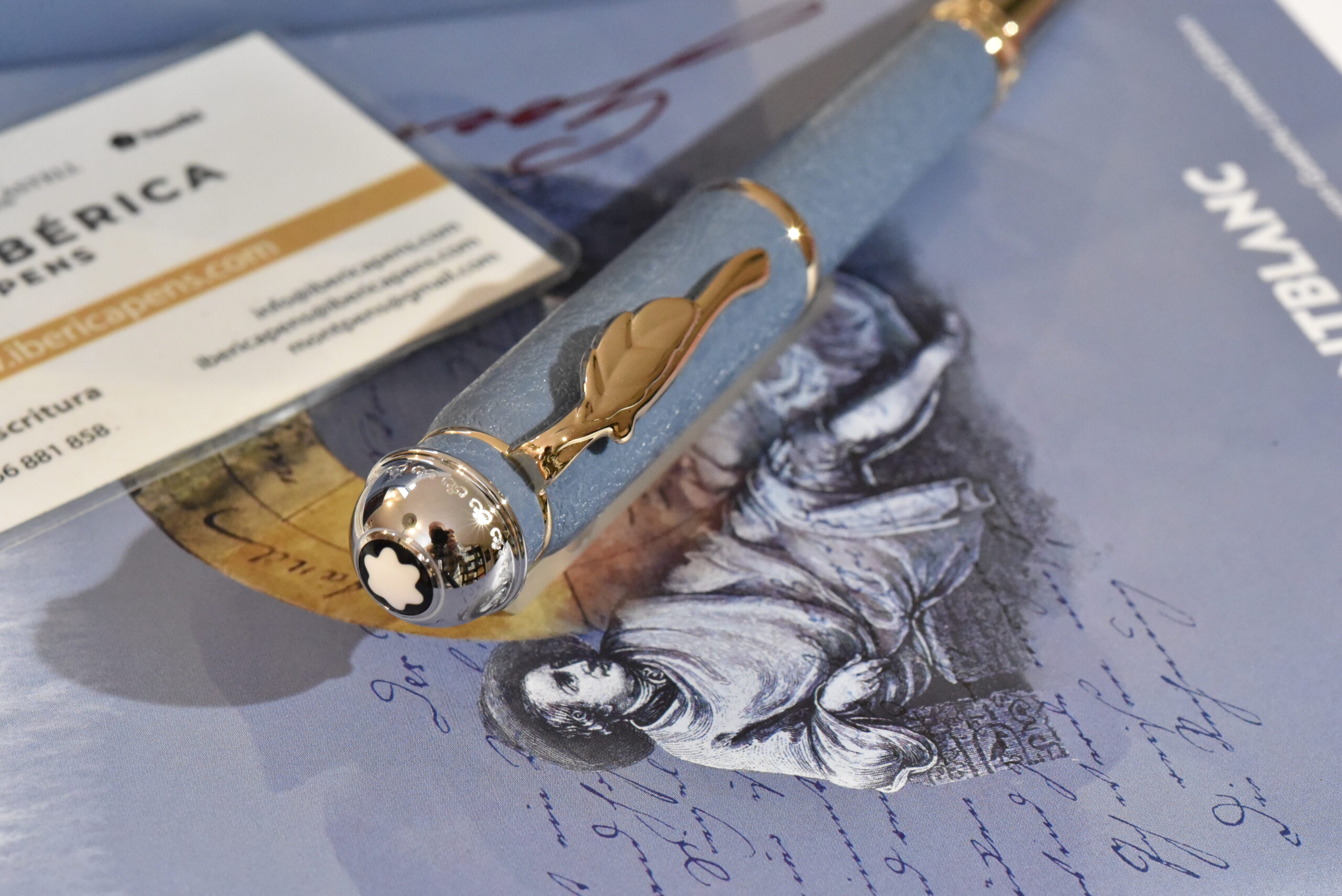
Ball
Made of precious resin with a specially molded motif
Cap
Made of precious resin with a specially molded motif
Size M, Color Blue
1 in stock
Description
At the heart of the 18th-century intellectual awakening stood one man in particular whose written word has stood the test of time: Johann Wolfgang von Goethe. A polymath, a giant of German literature, a lawyer, a government minister, a theater director, a prodigious collector, and a naturalist, he was in every sense a revolutionary, determined to expand the boundaries of perception and learning. Driven by an insatiable thirst for knowledge, his creative versatility knew no bounds.
The philosophical depth of Faust, the lyrical subtlety of his poetry, and the breadth of scientific exploration behind his theory of color and his botanical treatises were of transcendent importance and, through their variety and profound influence, attest to Goethe’s genius. As a poet and statesman, advisor, friend, and lover, he left an indelible mark on his contemporaries and continues to be a source of inspiration and insight to this day. With the support of the Klassik Stiftung Weimar and the Goethe National Museum it houses, Montblanc dedicates its Writers Edition, Homage to Johann Wolfgang von Goethe Limited Edition, to this universal genius, focusing especially on his literary works. Writing was Goethe’s raison d’être.
The largest edition of his complete works and writings currently comprises 40 volumes, containing some 3,000 poems. His drama Götz von Berlichingen was published anonymously in 1773, but just a year later, during a period of frenetic activity, he wrote The Sorrows of Young Werther in less than four weeks, which catapulted the 25-year-old lawyer to overnight fame. Young Werther put German literature on the European literary map. It is the story of a young man caught between love and duty, between burning passion and social conventions. An entire generation saw itself reflected in the fate of the unfortunate Werther. The novel has even influenced this Limited Edition: its striking description of marble inspired the look of the exquisite lacquer on the cap and reservoir, while the engraving on the reservoir ring evokes the frame of a copperplate illustration from a first edition of Werther. Another key design feature harks back to Goethe’s house in Weimar. The blue hue and pattern of the precious lacquer reflect the color and texture of the wallpaper in the Juno Room of the writer’s home. The distinctive gold-plated and platinum-plated details also recall other decorative elements in the interior. Around the top of the cap, a charming motif resembling a string of clover leaves is engraved. This detail originates from a letter Goethe wrote to his beloved Charlotte Buff, the model for the character of Lotte in his book The Sorrows of Young Werther.
A landmark work of the Sturm und Drang movement, the young Goethe’s epistolary novel was hailed as a stroke of genius and, above all, a masterpiece of world literature. In a letter dated January 26, 1827, Goethe interpreted the term “world literature” in a much more literal way than it is understood today. For him, it was a global process of literary communication and mutual artistic encouragement. Just as he incorporated elements of Persian poetry into his West-Eastern Divan cycle, this literature should aspire to be an expression of universality, transcending all linguistic, ethnic, and temporal barriers.
As a symbol of this concept of global literary dialogue, embodied by Goethe’s term “world literature,” the cap takes the form of a globe, crowned by the Montblanc emblem. Faust’s thirst for knowledge and his irrepressible desire to unravel the secrets of the world reflect Goethe’s own passion for investigating natural phenomena. In his old age, he even came to value his scientific achievements more than his poetic ones. In his Theory of Colors, he addressed a wide range of topics, from physics to the psychology of color, opening up a completely new perspective on the essence of color.
He also dedicated himself to optics and anatomy, biology and geology, archiving thousands of scientific specimens in jars and boxes. The slightly curved shape of the cap, reminiscent of an old glass flask used by a chemist, is a tribute to Goethe’s achievements as a scientist and collector. The leaf-shaped clip pays homage to his studies in the field of morphology and, specifically, to his proposal of an archetypal plant form. He even translated this idea into verse in his didactic love poem, The Metamorphosis of Plants. The overall design of the Limited Edition, particularly the barrel and nib, is inspired by the type of writing instrument with which Goethe committed all his knowledge, ideas, and the fruits of his seemingly boundless poetic imagination to paper.
Related products
-
![]()

Montblanc Imperial Dragon Writers Edition Fountain Pen 1993
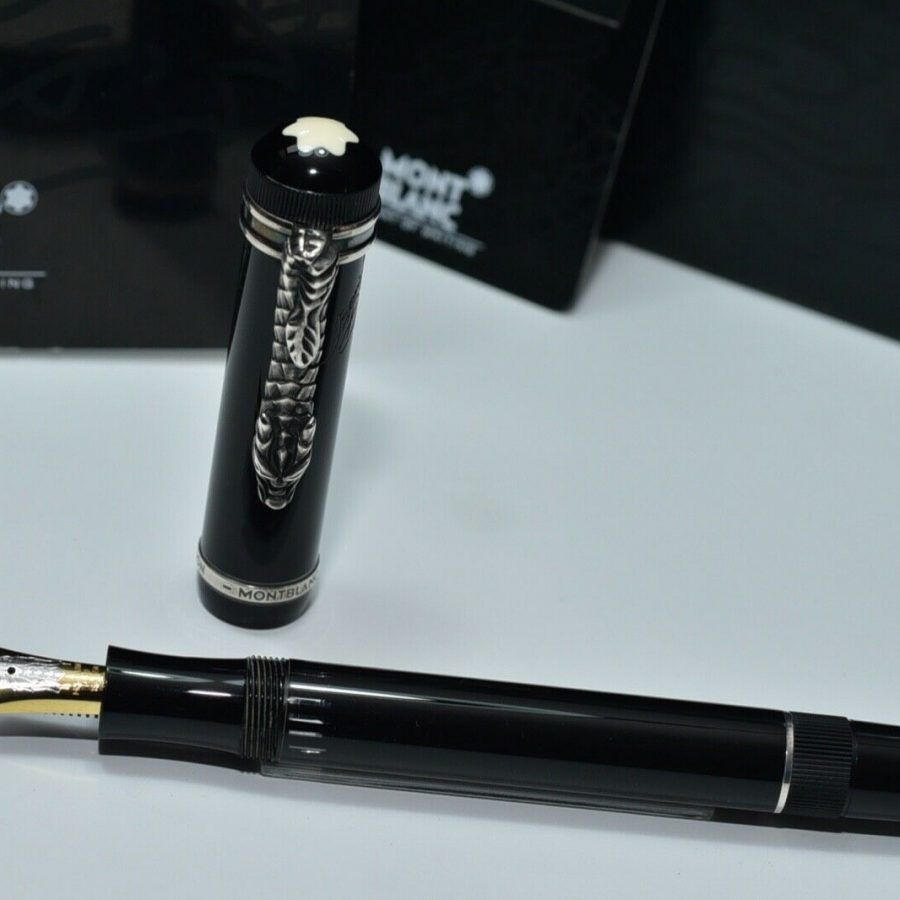
3.300,00€The Writers Edition Imperial Dragon gives this glorious creature new life and demonstrates why the dragon has fascinated people for centuries. Each pen in this edition is decorated by an elaborately made dragon clip in 925 sterling silver. Two rubies make the eyes of the dragon glow magically.
The dragon clip and the engraved cap ring form a striking contrast to the barrel, which is made of black precious resin, and the rhodium-plated 18-karat gold nib pays tribute to the mythical creature with an engraving of a dragon’s head.
External box is ballpoint pen.
Launch: 1993
Limitation: 5.000 Fountain Pens
Black precious resin
925 sterling silver
Dragon’s eyes set with rubies
Rhodium-plated 18-karat gold nib -
![]()
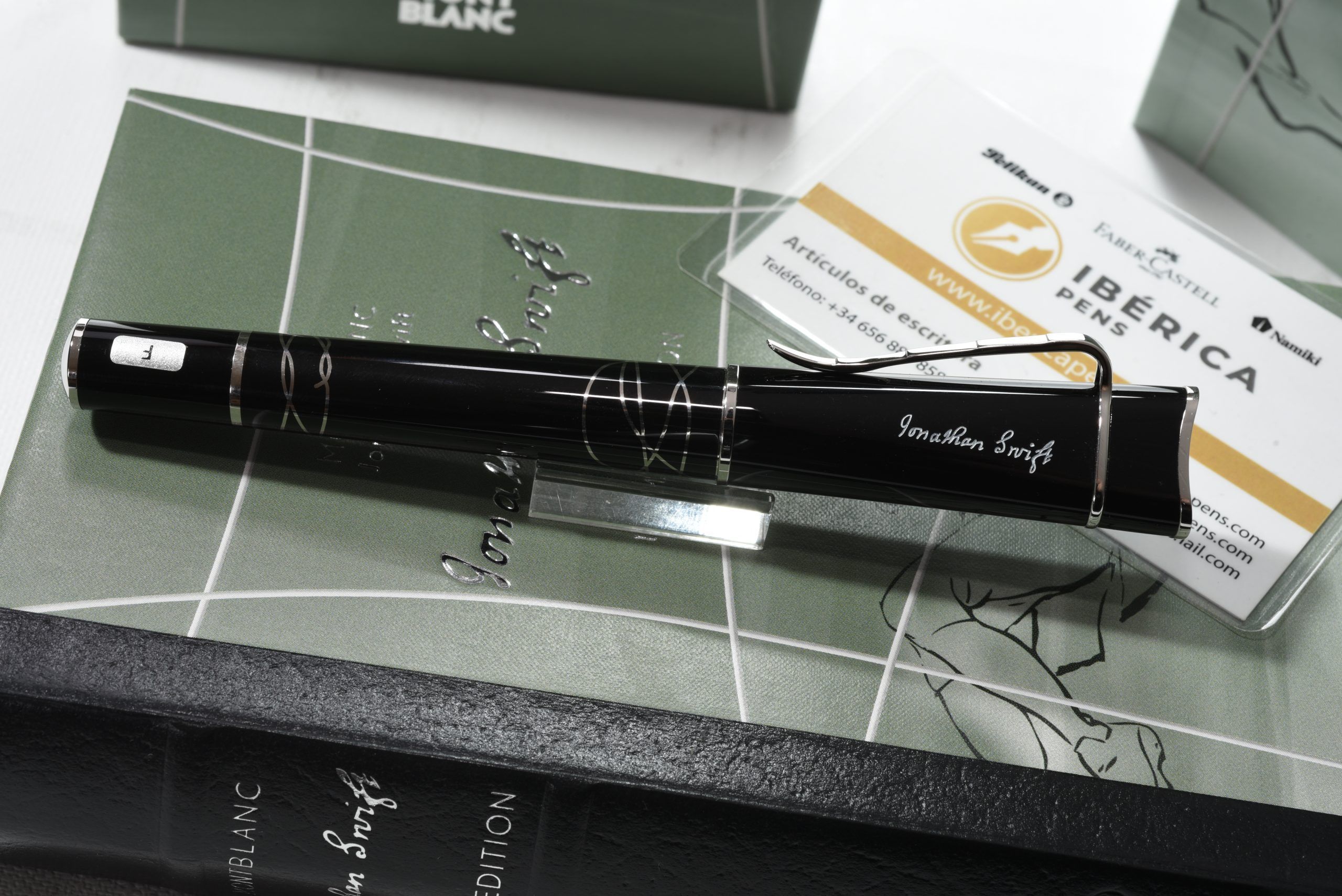
Montblanc Jonathan Swift Writers Edition fountain pen
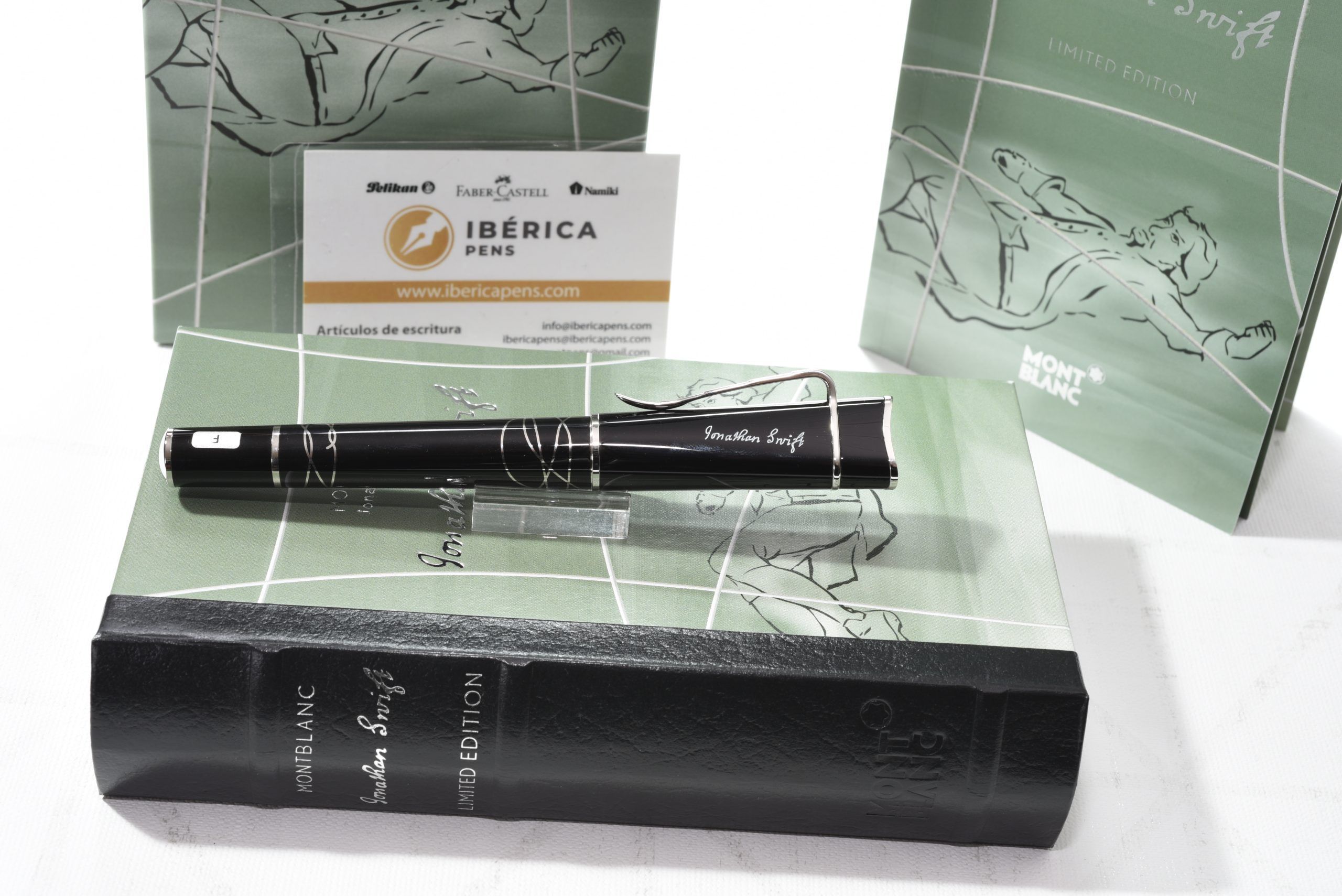
1.200,00€EDITION: Writers (Writers Editions)
MATERIAL: Black lacquer deposit with multi-layer composite inlays, evokes the ropes with which Gulliver was tied on the island of Lilliput
Black resin cap that evokes Gulliver’s three-cornered hat with its shape and bears the signature of Jonathan Swift
Platinum clip that symbolizes the ladder that the mayor of Lilliput had to climb to speak to Gulliver
LAUNCH: 2012
-
![]()
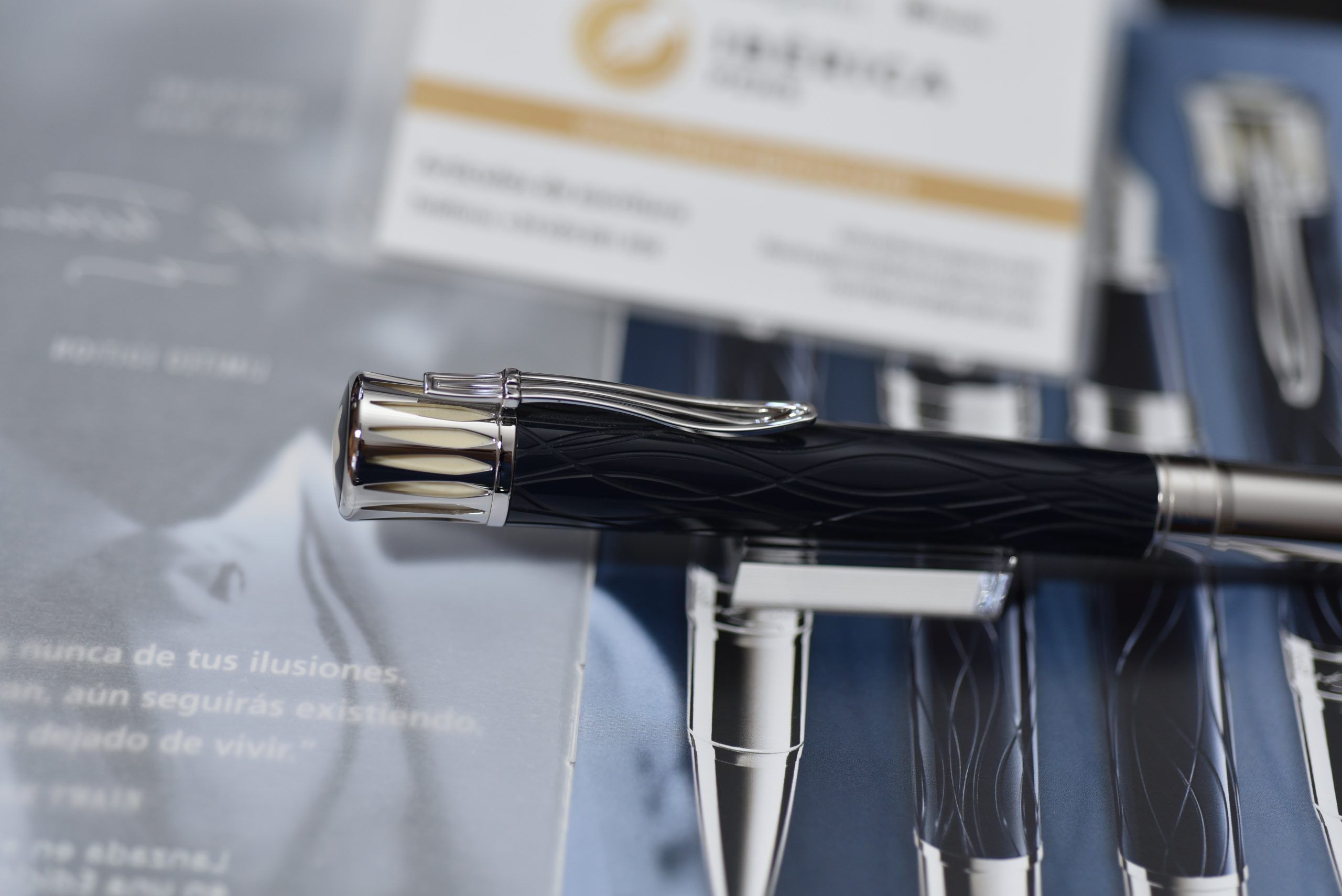
Montblanc Mark Twain Writers Edition new ballpoint pen
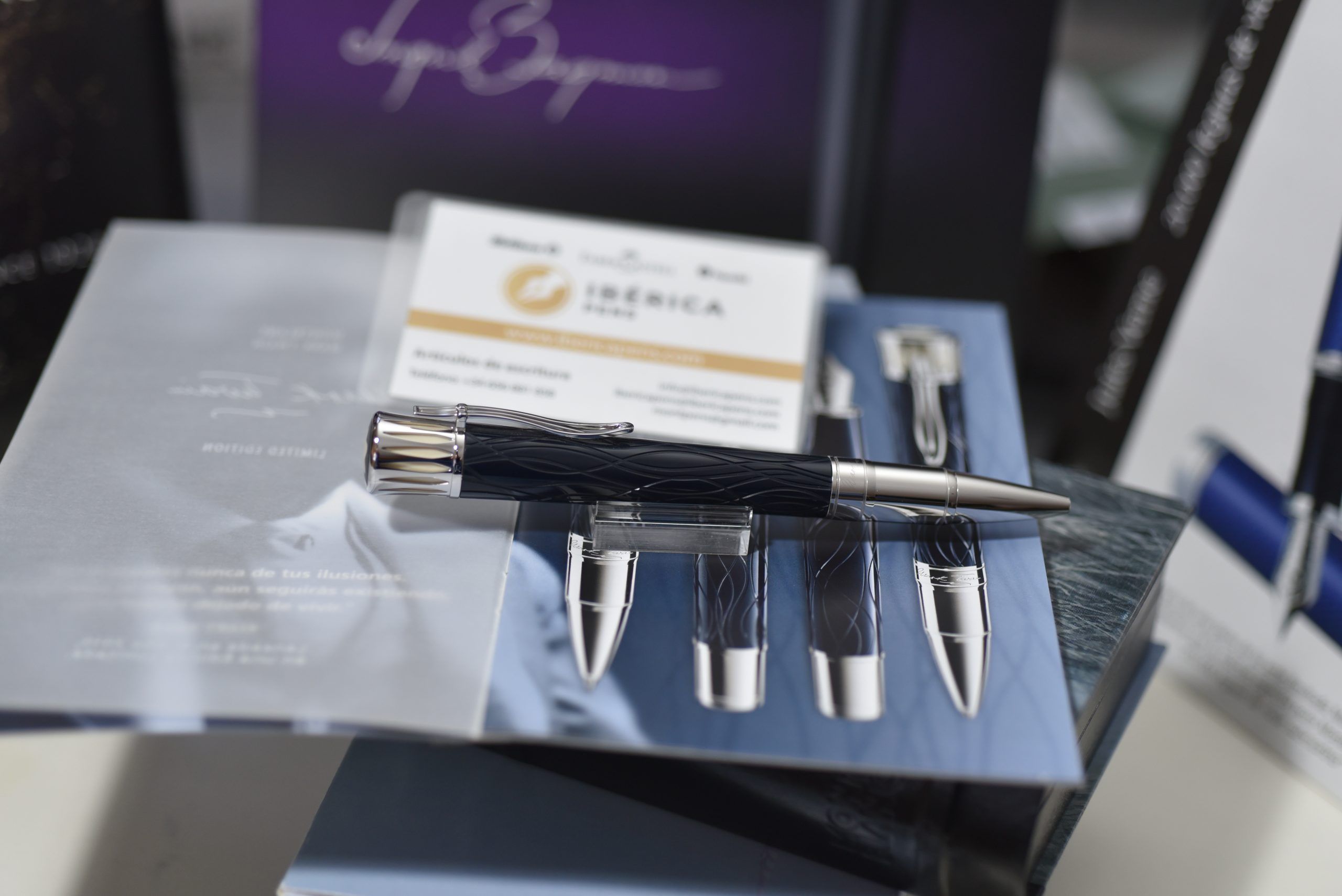
750,00€Montblanc Limited Edition ballpoint pen in homage to the American writer Mark Twain of 15,000 units worldwide. Made of deep blue precious resin with curved engraving imitating the flow of water from the Mississippi River.
Metallic details in rhodium silver. His clip features Tom Sawyer’s mouth harp.
Upper part of the hood imitating the chimney of a steam ship.